Download Printer Friendly PDF Version
|
pH / ORP / ISE Process Measurement & Control Systems |
|
Case Study # 11 – HF Treatment Systems - (January 2004) |
|
Features · Guaranteed Longest Lasting Sensors Available with performance guarantee *
· Sensors are compatible with most existing pH/ORP Meters, Transmitters & Analyzers **
· Application Specific Engineering results in optimum Lifetime & Performance ***
· Integrated Temperature Compensation, Preamplifiers & Solution Ground Elements
· Solid State Reference System offers superior resistance to Fouling & Dehydration
· Applications such as Acid/Fluoride, Hi-Temp, Saturated Sodium and Sulfide Resistant are available as standard options
· Custom Applications are available, often at no additional charge
· Most Installation Styles are Supported Including: Immersion, Twist Lock, Valve Retractable & Sanitary
· Available in a wide range of plastics, from cost effective CPVC to thermally & chemically resilient ULTEM® and PEEK thermoplastic
· High Pressure Applications up to 100 psi for Valve Retractable & 150 psi for Inline Installations can be supported for continuous use
· Operating Temperatures from -30 to +150 ºC (-22 to +302 ºF) can be supported for continuous use |
Case Study No. 11 – pH Control in HF Treatment Systems
High HF Resistant pH Sensors for HF neutralization
The Problem An aluminum can etching and a silicone wafer etching company wanted to effectively treat their wastewater using a traditional CaF2 removal system. This was achieved by using a pH sensor to control the amount of calcium hydroxide or calcium chloride added. Typical operating conditions result in a coating of the sensor that can adversely affect its performance. Such conditions are exacerbated by the intermittent excursions into the low pH and high fluoride conditions. Previously used sensors accelerated their own demise because the sensors became insensitive to pH change after coating, even with repeated cleanings, thus causing a process excursion due to a lack of caustic addition. This lack of caustic addition, then caused the system to flood, over time, with the process etching solution containing hydrofluoric acid, primed with either sulfuric acid (aluminum etching) or hydrochloric and nitric acid (wafer etching).
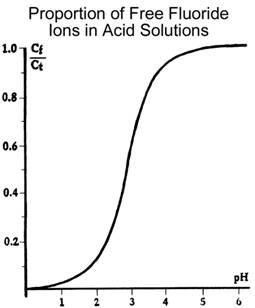
The Solution A sensor that was less susceptible to fouling from the addition of calcium hydroxide was required. This was accomplished by selecting a solid state polymer reference system. The sensor would also need to survive the brief, but aggressive excursions into the low pH and high fluoride conditions that may occur due to etch solution dumping, intermittent process control problems or the use of strong acid cleaning solutions. The use of a high HF resistant pH glass was able to survive these excursions to the low pH and high fluoride conditions, without giving up the accuracy and stability that only a glass pH element can provide. Alternative pH sensing element technologies used in high HF media by other companies such as antimony or ISFET survived the process conditions but did not offer adequate accuracy for process control. Lastly, the sensor required cleaning with concentrated hydrochloric or half dilute hydrochloric acid to effectively remove the calcium deposits without the use of abrasive cleaning. Both the solid state reference system and high acid/fluoride resistant pH glass element are well suited for such cleaning. The use of aggressive chemical cleaning supplemented by minimal mechanical cleaning greatly elongated the sensor lifetime due to reduced glass breakage and reduced overall damage to sensors during the cleaning process. Extent of Ionization (Cf / Ct) as a function of pH at 25 ºC
Choosing the Correct pH/ORP Sensor
1. Choose a sensor body type that suits the physical parameters of the installation (refer to the Configurations Portion of pH/ORP and Ion Selective webpages). 2. Choose a sensor that suits the process application, temperature, chem istry, and physical parame ters of the installation (refer to Sensor Selection Guides and call factory or local sales agent for support) 3. Choose a sensor housing material that is compatible with the process chemistry, temperature & pressure (refer to Chemical Resistance Charts as posted under the Technical Documents portion of the website). 4. Select suitable temperature compensation element, solution ground & integrated preamplifier based upon the mating pH/ORP Instrument (refer to Electrochemical Instrumentation Page & ask for factory support). 5. Specify the required cable length based upon installation location (refer to Part Numbering Guide).
* Subject to application qualification and review by an approved ASTI sales agent and/or factory. Performance guarantee is posted on the ASTI online application questionnaire page. ** See list of supported pH/ORP/ISE Instruments webpages as posted on the ASTI website. *** Completion of Application Questionnaire form is required. Other restrictions may apply. |
||||